






Summer turns a regular workday into a sweaty endurance test. Your chair is either working with you or against you, and if it traps heat, it is definitely working against you. A breathable mesh office chair solves the most overlooked comfort problem in any workspace: ventilation. Beyond staying cool, the right chair also supports your back and holds up over years of daily use. Here is what to know before you buy.

How a Breathable Mesh Office Chair Keeps You Cool All Day
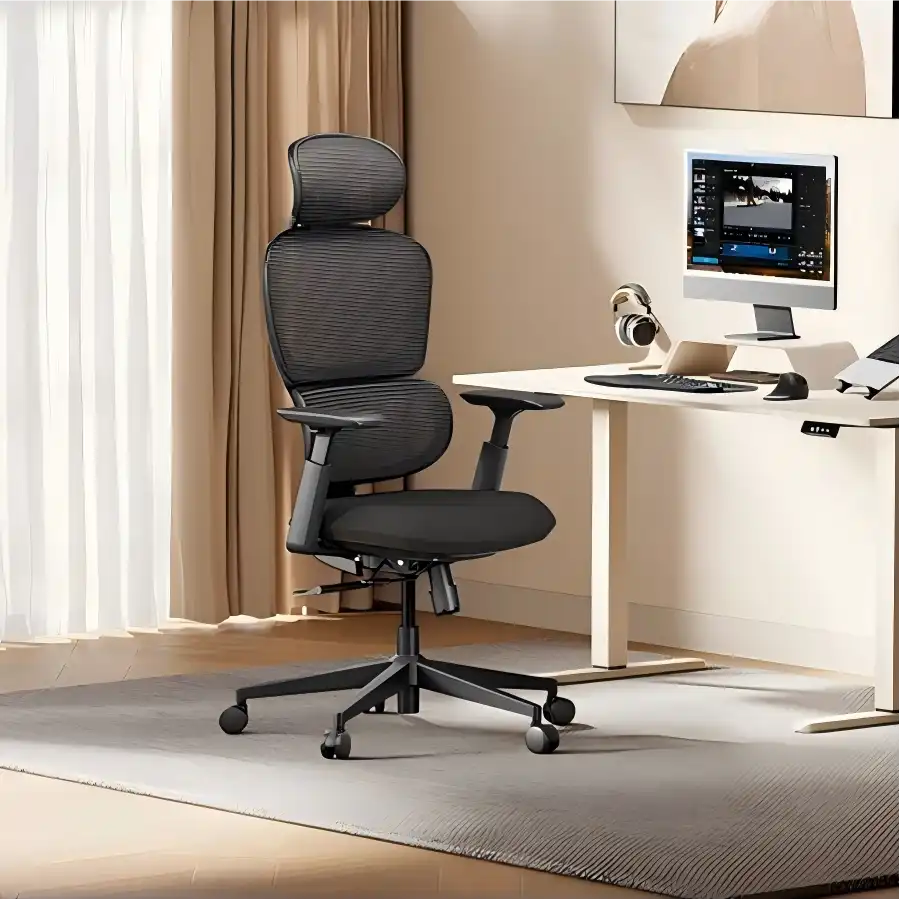
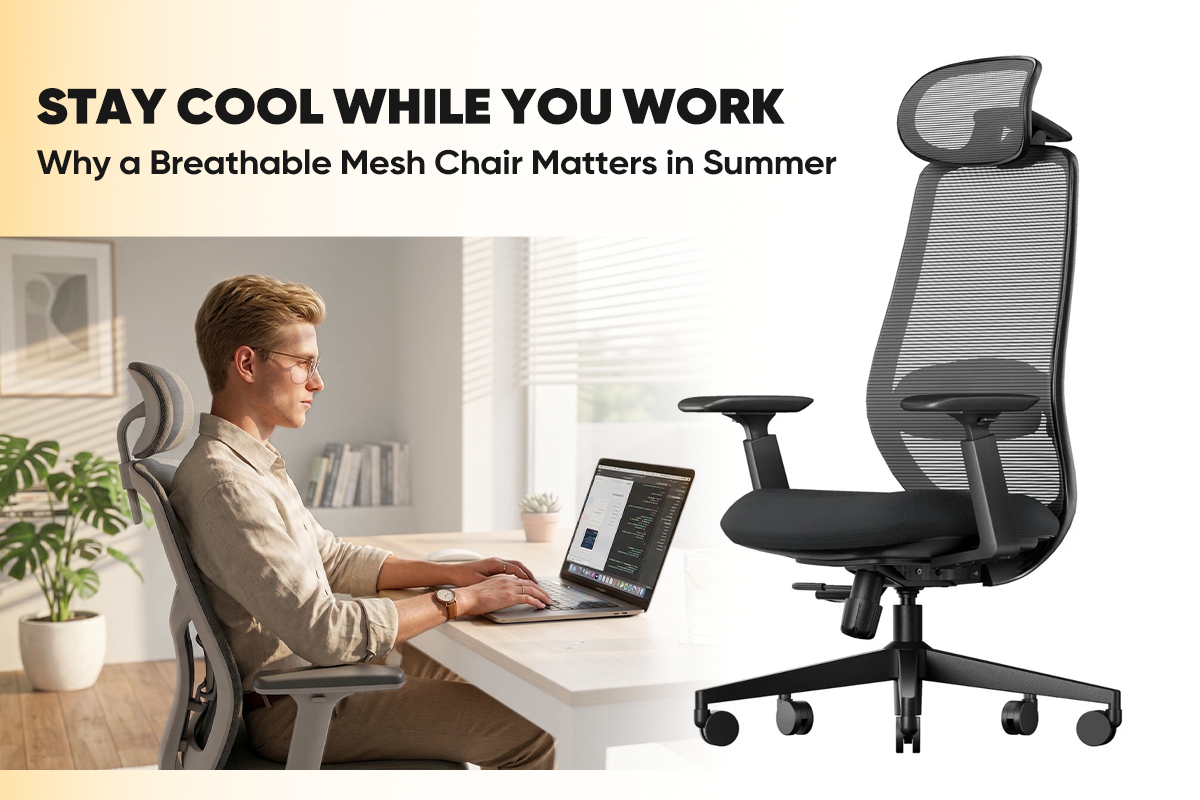
Most people blame the room temperature when they feel hot at their desk. The real culprit is often the chair itself. Solid surfaces like foam, leather, or thick fabric block airflow completely, trapping body heat against your skin for hours. A breathable mesh office chair works differently. Its open-weave structure lets air move continuously through the backrest and seat, which prevents heat and moisture from building up.
Why Airflow Matters More in Summer
During warmer months, your body generates more heat just sitting still. Without ventilation, that heat has nowhere to go. The contact points between your back and your chair become warm and damp within the first hour, which creates physical discomfort and makes it harder to focus.
Good airflow from a mesh backrest addresses this directly. It does not cool you down the way air conditioning does, but it removes the trapped heat that builds up over a long sitting session. The result is a more consistent, neutral temperature against your skin, and that small difference compounds over an eight-hour workday.
What Makes Mesh More Breathable Than Fabric or Leather
The difference comes down to material structure:
- Fabric chairs have dense fibers that absorb moisture but restrict airflow, leaving you feeling damp over time
- Leather and faux-leather chairs create a sealed surface with zero breathability, making heat build-up almost immediate
- Mesh chairs use an open-grid weave that allows continuous passive airflow, meaning air circulates even when you are not moving
High-quality mesh is also designed to stay taut and maintain its shape so the airflow channels stay open over time, which connects directly to long-term durability.

Back Support in a Mesh Office Chair With Lumbar Support
Staying cool matters, but a chair that only offers ventilation without structural support will cause its own set of problems. A mesh office chair with lumbar support combines both: the open mesh keeps you cool while the built-in support system protects your spine during long work sessions.
What Lumbar Support Actually Does for Your Spine
Lumbar support refers to the section of a chair backrest that targets the lower back, specifically the inward curve of the lumbar spine (the five vertebrae between the ribcage and the pelvis). Without support at this curve, the spine tends to flatten or round forward under the weight of sitting, which puts sustained pressure on the discs and muscles in your lower back.
A well-designed lumbar system holds that curve in its natural position. This reduces muscular fatigue, lowers the risk of lower back pain over time, and helps you maintain better posture without conscious effort. For anyone sitting more than a few hours a day, this is not a luxury feature. It is a basic ergonomic (relating to designing equipment that fits the human body) requirement.
Key Adjustments to Look For in an Office Chair With Back Support
Not all lumbar support is equal. A fixed lumbar pad that works for one person's body will miss the curve entirely for someone else. When evaluating an office chair with back support, look for these adjustable features:
- Height adjustment so the support lands at your lumbar curve, not above or below it
- Depth adjustment so the firmness and forward pressure can be tuned to your preference
- Headrest adjustment for neck support during reclined positions
- Seat depth adjustment so your thighs are properly supported without cutting off circulation behind the knee
The more independently these elements adjust, the better the chair can fit a wide range of body types.

What to Know About Mesh Office Chair Weight Capacity and Durability
A breathable mesh office chair is only a good long-term investment if the materials are built to last. Two factors are easy to overlook when shopping but matter a great deal in daily use: weight capacity and structural durability.
Weight capacity refers to the maximum load a chair is rated to support safely. Chairs in the mesh office chair with lumbar support 300 lb capacity range are typically reinforced in three key areas:
- Stronger gas-lift cylinders (the pneumatic mechanism that controls seat height)
- Denser, high-resilience foam cushion cores
- Reinforced bases, often made from aluminum alloy for a better strength-to-weight ratio than plastic alternatives
Mesh durability is a separate consideration. The mesh should hold its shape and tension after extended use rather than stretching out over time. A sagging backrest does not just feel uncomfortable. It also defeats the posture-support function entirely. Look for chairs that specify resilience testing in their product documentation.
How to Keep Your Breathable Mesh Office Chair in Good Shape
Buying a well-made chair is only half the equation. Regular care extends its lifespan significantly and keeps the ventilation and support functions working as intended.
Daily Habits That Protect the Mesh
Small, consistent habits make a bigger difference than occasional deep cleaning:
- Avoid sitting on the edge of the seat repeatedly, as this concentrates stress on a narrow area of the mesh and frame
- Wipe down the mesh backrest weekly with a slightly damp cloth to prevent dust and oil from clogging the mesh pores
- Adjust the chair to fit your body properly rather than compensating with posture, which reduces uneven stress on the structure
- Keep the chair away from prolonged direct sunlight, which can degrade certain mesh materials over time
How to Spot and Prevent Early Wear
Catching small issues early prevents larger structural problems later. Check these areas every few months:
- Mesh tension: Press lightly against the backrest and seat mesh. It should feel firm and spring back immediately. If it feels loose or slow to recover, the mesh may be losing elasticity.
- Caster wheels: The rolling wheels at the base collect hair and debris over time. Clearing the wheel axles regularly keeps movement smooth and reduces stress on the chair base.
- Adjustment mechanisms: Test the lumbar, armrest, and recline locks every few months. Mechanisms that slip or feel loose are early signs of wear worth addressing before they affect support.
Upgrade Your Summer Workspace With the Right Mesh Chair
Summer is long, and your desk is not going anywhere. A breathable mesh office chair with proper lumbar support and a solid build is not just a seasonal upgrade. It is a foundation for working more comfortably all year. ProtoArc's ergonomic mesh chair lineup is designed with exactly these priorities in mind: ventilation, adjustable back support, and materials built for daily use. Browse the full range and find the fit that works for your body and your workspace.
FAQs
Q1. Is a Mesh Office Chair Good for People Who Run Hot?
Yes, mesh is consistently the best chair material for people who tend to overheat while sitting. The open-weave structure allows passive airflow that fabric and leather cannot match. For warm climates or home offices without strong air conditioning, a breathable mesh office chair is a practical first choice rather than a premium upgrade.
Q2. Can I Use a Breathable Mesh Office Chair on Carpet?
Most mesh office chairs come with standard caster wheels that work on both hard floors and low-pile carpet. High-pile or thick carpet may create resistance with standard casters. Some chairs offer optional hard-floor or carpet-specific caster upgrades, so it is worth checking the product specifications before purchasing.
Q3. How Long Does a Quality Mesh Office Chair Typically Last?
A well-built mesh chair used daily under normal conditions can last many years with basic maintenance. Lifespan depends on the quality of the mesh material, frame construction, and how consistently the chair is maintained. Chairs that have been tested for a high number of stress cycles tend to retain their shape and support significantly longer than untested alternatives.
Q4. Does Lumbar Support in a Mesh Chair Work for Shorter or Taller Users?
Fixed lumbar support often misses the mark for users outside an average height range. Chairs with height-adjustable lumbar systems are designed specifically to accommodate a wider range of body sizes, allowing the support to be positioned at the correct spinal curve regardless of how tall or short the user is. Always check the recommended height range listed in a chair's specifications before purchasing.


