Under $500, price does not track fit. It tracks three separate upgrades, and they arrive at different points: a lumbar you can move by hand, a seat that changes depth, and a longer warranty.
The full adjustment set — a sliding seat, two-way lumbar, four-dimensional armrests — is already on sale between $170 and $240. What that band does not guarantee is that any one chair has all of it. Above $250 the lumbar starts following your back, but the seat can stop sliding. Above $350 the seat becomes a size range and the warranty reaches seven years.
So the question is not which band. It is: which of those three do you need, and does the chair in front of you actually have it?
- $170–$240. 3D armrests are the floor. A sliding seat and 4D armrests exist here, but only on some chairs. Lumbar is mechanical, warranty is usually three years.
- $250–$340. 4D armrests and a 3D headrest are common, and the lumbar starts moving with your back. A fixed seat is still normal at this price.
- $350–$500. Seat depth becomes a range rather than a position, six-way armrests appear, and the warranty reaches seven years.
The three chairs compared in detail below all sit in the first band, which is where most buyers land. The two bands above are described from published specifications, because that is the only part of a chair you can check before it arrives.

What separates a chair you can sit in for eight hours
Seat depth, lumbar travel and recline locks decide an eight-hour chair. Mesh, foam and brand do not. Eight hours is not one good posture held longer: it is a day of leaning back, reaching for the keyboard and sitting up again. What matters is whether the chair lets you change position and still supports you after each change, and those three are the ones you will move again during the day, not once at setup.
Seat depth: 16 to 22 inches. Depth decides whether your thighs are supported or your knees are pressed. Width is rarely the problem; almost every chair in this range is 20 inches wide. The variable is depth, and whether it slides. If the chair is shared or you change posture, 1.5 inches of travel is the minimum worth having. Below 18 inches is where smaller users start looking; past 21 inches is where long thighs run out of support.
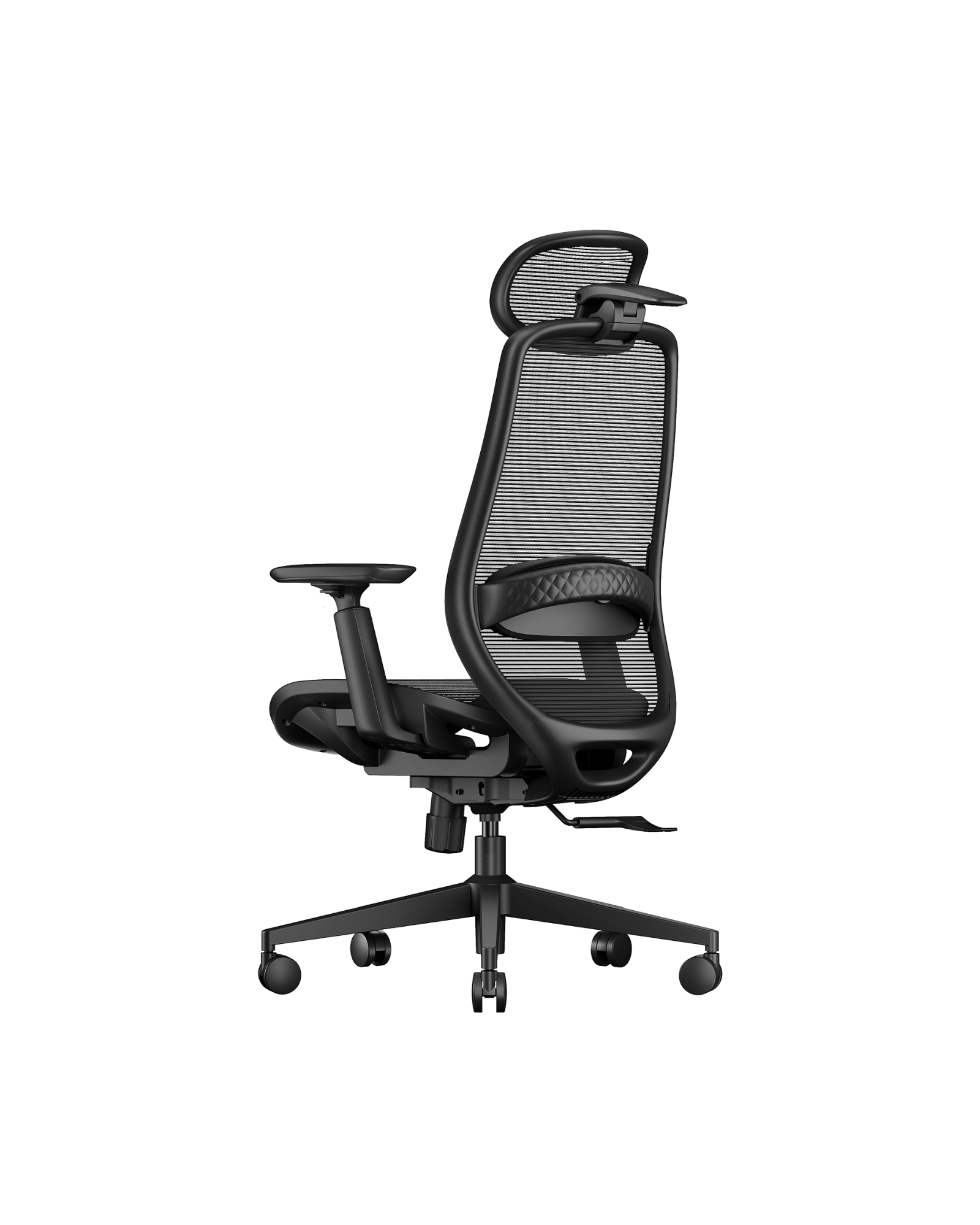
Lumbar travel: 0 to 2.4 inches. A pad only helps if it lands on your curve. A fixed support cannot be positioned by hand; a two-way support moves up and in; a self-following support moves as you recline. If your lower-back curve sits an inch or more from where a fixed pad lands, 2 inches of height travel is the minimum. Without it, a feature that sounds like support becomes a pressure point.
Recline locks: 3 to 4 positions. Recline is the third variable. Three lock positions is the minimum worth paying for; four adds a stop between upright work and a full lean-back. A chair that holds one angle makes you fight it all afternoon. Where a lock count is not published, treat the recline as friction-only: you can lean back, but you cannot pick an angle and hold it.
That leaves out mesh, review count and armrest width. Two things do block a purchase: armrest height and weight rating.
Measure these three before you compare
The measurements take about five minutes at the desk you actually use, and they decide more than any spec table.
Desk clearance. Sit with your feet flat and your elbows at roughly 90°. Measure from the floor to the underside of the desk, and from the floor to the top of the armrest at typing height. If the gap is under about an inch, the chair will not slide under. A minimum armrest height is rarely published, so this is the only check.
Seat depth. Sit against the backrest and slide a flat hand behind your knee. Two to three fingers, about 2 inches, means the depth is right; a pressed palm means too deep; a fist means too short. If the answer changes when you lean back, you need a sliding seat rather than a different chair.
Lumbar landing. Find the most inward point of your lower back and measure its height above the seat. If a fixed pad lands more than an inch from that point, 2 inches of height travel is the minimum.
If one of these falls outside the ranges in the table below, no price band fixes it.
What each price band buys
Each column is what the published specifications show across several brands, not a single flagship. Where a feature is common but not universal, the cell says so.
| Dimension | $170–$240 | $250–$340 | $350–$500 | Check before buying |
|---|---|---|---|---|
| Armrests | 3D is the floor; 4D on some chairs | 4D common, not universal | 4D standard; six-way from about $400 | 4D means height, depth, sideways and rotation |
| Lumbar | Height, plus depth at the top of the band | Two-way, self-following on some models | Two-way or self-following, often three zones | Self-following is the one upgrade you cannot add later |
| Seat depth | Fixed, or 1.5–2.4 inches of slide on some chairs | Fixed on many chairs; a slide is not guaranteed | A 2.5–4 inch range, for example 18–22 inches | A slide covers two users; a fixed depth suits one |
| Recline and headrest | 3 locks low, 4 high; headrest on most | 4 locks, 3D headrest common | 4–5 locks, 3D headrest standard | A headrest only helps when you recline |
| Published weight rating | 330–400 lb | 275–350 lb | 275–330 lb | A rating is a tested ceiling, not an all-day comfort figure |
| Warranty | 3 years typical, 5 on some chairs | 3–5 years | 5–7 years on most; some still stop at three | The only column that rises at every step |
| Published fit range | Rare; dimensions instead | Sometimes | Common, often 5'2"–6'2" | The only claim you can check against your own body |
Two rows behave unlike the rest. Warranty rises with price at every step, which makes it the one honest shortcut: if a chair costs more and warrants less, the money went somewhere else. Weight rating falls instead. The highest ratings in this range sit at the bottom of the price scale, because a mesh back rated to 400 lb is a cheaper thing to build than a back rated to 275 lb and certified for eight-hour commercial use.
Where the price ladder breaks
Seat depth is the least predictable column, so it is the one that breaks the ladder. Three cases from the same market:
$199.99 with 4D armrests and a sliding seat. At the bottom of the range, one chair pairs four-dimensional armrests with 2.4 inches of seat slide. Nothing in the band above adds to that.
$269.99 with a fixed seat. A mesh chair at this price ships with an 18.1-inch seat that does not slide, and a three-year warranty. It is the better chair in materials and lumbar behaviour, and the worse one at a shared desk.
$499 rated to 275 lb. Near the top of the range, a widely sold chair is rated 110 lb lower than a $170 chair. The extra money bought a lighter frame, a European mechanism and a seven-year warranty, not more capacity.
The pattern is consistent: above $250 you are buying a different set of parts, not a superset. That is why a higher price can buy a worse fit — not because the chair is bad, but because it was designed around a different body.
Three fits in the $170–$240 band
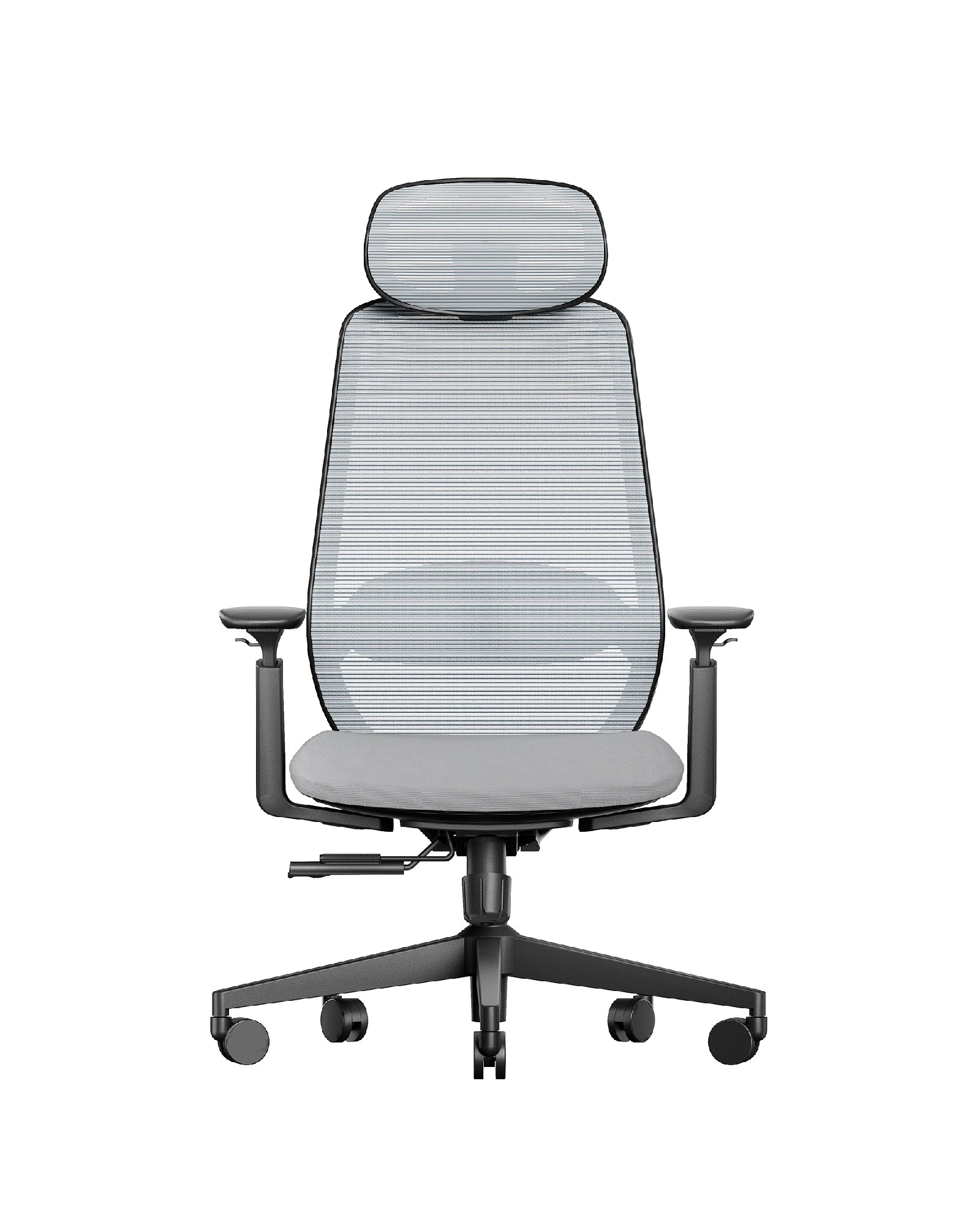
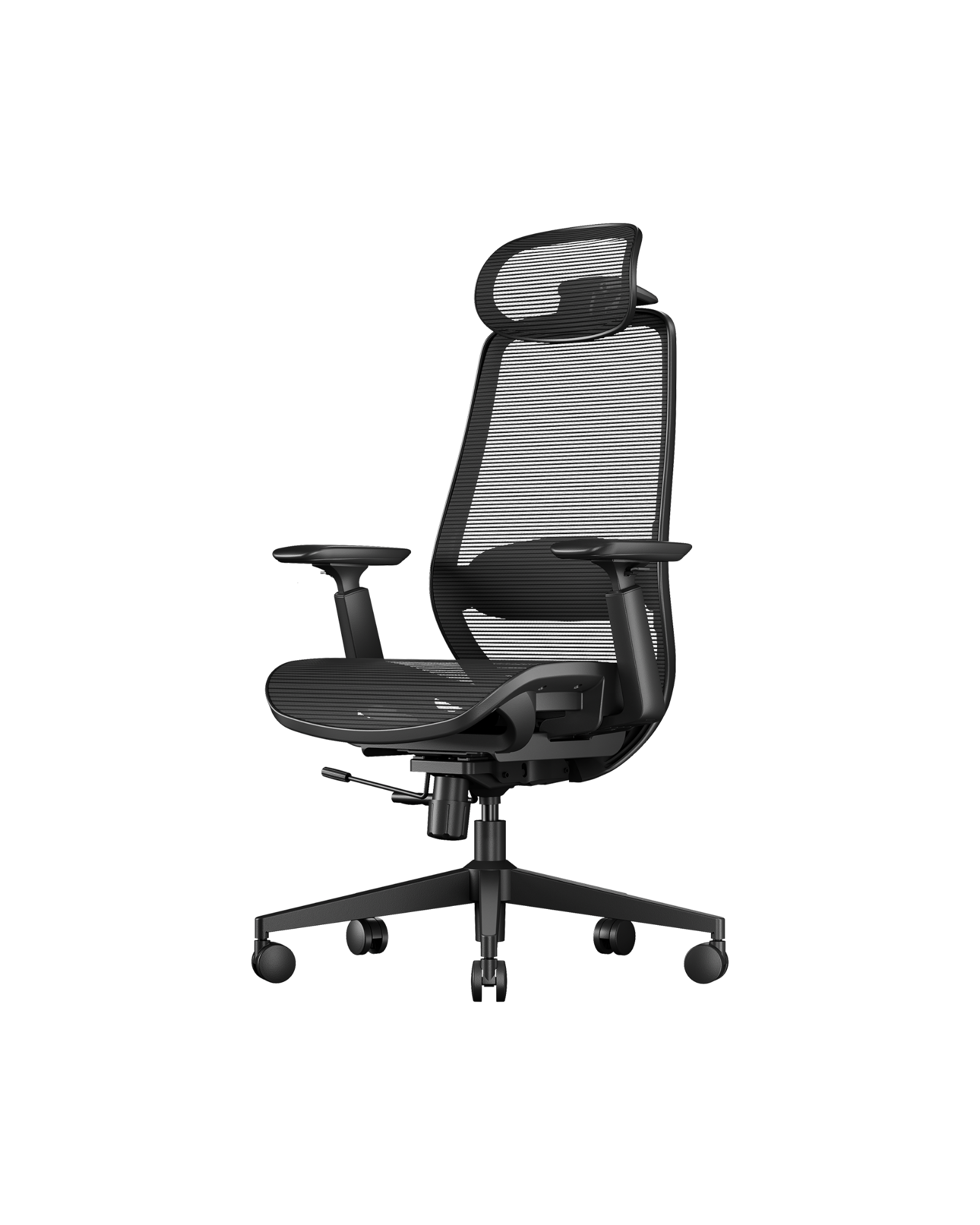
Inside the first band, three chairs share a price spread of about $90 and the same 220 lb rated load. Four things separate them: seat width, whether the lumbar can be moved by hand, how many directions the armrests travel, and whether there is a headrest.
| Dimension | 17.7-inch seat | 20-inch seat, height-only arms | 20-inch seat, 4D arms | What it decides |
|---|---|---|---|---|
| Price | About $160 | About $190 | About $250 | A $90 spread across one band |
| Seat depth | 17.72", plus 1.6" slide | 20", plus 1.97" slide, 5 positions | 20", plus 1.97" slide, 5 positions | Does your thigh fit 18 inches or 20? |
| Lumbar | Fixed, built into the backrest | Two-way: 2.36" up, 0.8" in | Two-way: 2.36" up, 0.8" in | Fixed lumbar is the one thing you cannot add |
| Armrests | Height only, 3.9" travel | 2D: height | 4D: height, depth, sideways, 30° rotation | Clearance first, then elbows |
| Headrest and recline | None; 3 locks, 95°–125° | 3D headrest; 4 locks, 90°–130° | 3D headrest; 4 locks, 90°–130° | A headrest only matters when you recline |
| Published fit | 5'1"–6'0", 90–220 lb | 5'4"–6'0", 90–220 lb | 5'4"–6'0", 90–220 lb | The narrowest range is the one to check first |
Two of the three are the same chair with different armrests: same seat, same lumbar, same headrest, same recline. The $60 between them buys armrest travel and a mesh seat, nothing else. The third trades a shorter seat and a fixed lumbar for the widest fit range in the group — it starts at 5'1" instead of 5'4".
For one user with one posture, the fixed lumbar is a real cost. For a user under 5'4", the shorter seat is the whole reason to look at it.
Which one for which desk
Four setups cover the common cases, and each has one answer.
A solo desk, one posture, 5'4"–6'0". The 20-inch seat with height-only arms. A fixed posture does not need armrests that rotate; the sliding seat and the two-way lumbar are what an eight-hour day uses, and this chair has both for about $60 less.
A desk shared by two people. Either 20-inch seat. Both carry a 1.97-inch seat slide and 2.36 inches of lumbar travel, which covers two users a few inches apart without tools. The 17.7-inch chair cannot be re-fitted to a taller user, because its lumbar does not move.
A bedroom or small study. The 17.7-inch seat. Its seat is 2.3 inches shallower than the other two and the footprint is the smallest of the group. If the room is tight enough that you turn sideways to sit down, footprint matters more than a headrest you will not use. The trade is real: fixed lumbar, no headrest, and a fit range that stops at 6'0".

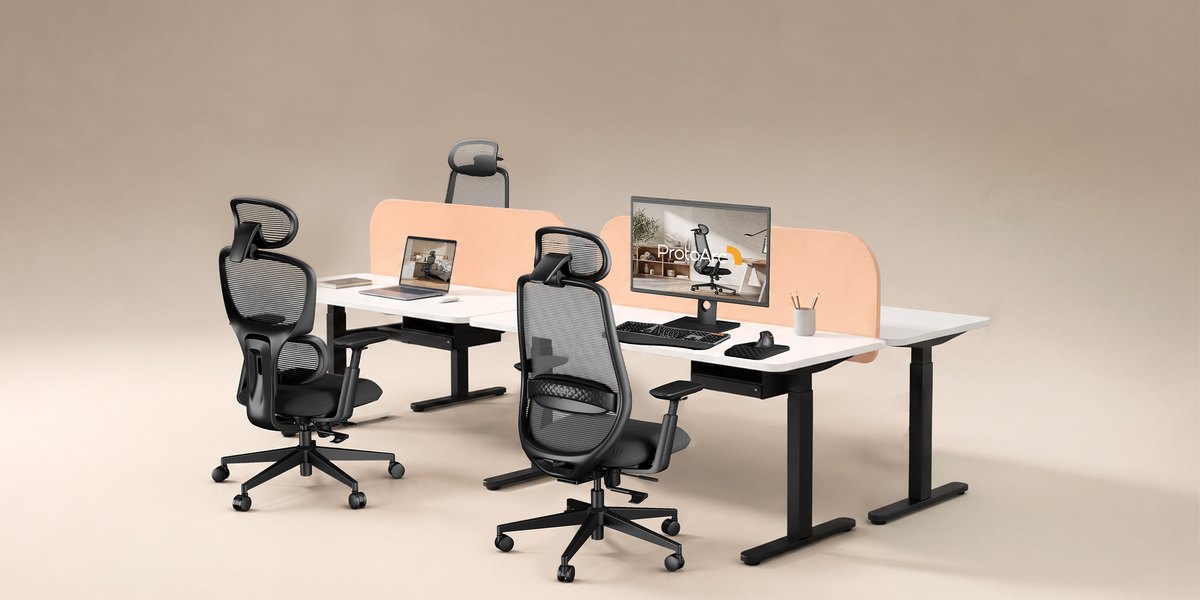
A multi-monitor workstation. The 20-inch seat with 4D arms, with the desk set before the chair. Two displays push your eyeline up and your elbows forward; the chair's job is to hold your shoulders down while your arms rest. On a two-screen desk the armrest has to follow your elbows forward, so desk and monitor height come first.
When none of these is right
These cases sit outside all three, and in each the honest answer is to stop comparing inside this band.
- You are under 5'1". The shortest seat here starts there. Look for a seat shallower than 17.7 inches, or a chair sold in sizes rather than adjustments.
- You are over 6'0". Both 20-inch chairs stop at 6'0". Ranges to 6'2" exist in the $350–$500 band, so this is a budget step, not a dead end.
- You weigh more than 220 lb. This group is out. Chairs at $170–$215 elsewhere publish ratings of 330 to 400 lb, so leave the group rather than stretch its rating.
- Your desk is under 28 inches high. Minimum armrest height is rarely published, so the clearance check above is the only test.
- You need armrest rotation beyond 30°, recline past 130°, or have numbness down a leg. Rotation stops at 30° on the 4D chair and the other two do not rotate at all; a chair changes pressure, not a medical cause.
- You need a 12-year warranty or commercial certification. Both start above this range, and neither is a fit issue.
Common questions
Is a $400 chair better than a $200 chair for eight hours? Not by default. In this range the extra money buys a lumbar that follows your back, a seat depth range and a longer warranty, and it can cost you seat travel and rated load. Check the three measurements first, then the price.
I am 6'1". Will a chair under $500 work? Yes, if you check the published range. Several chairs between $350 and $500 publish a range that reaches 6'2"; the three in the first band stop at 6'0".
Can two people share one chair? Yes, if both are inside the published range and the chair has at least 1.5 inches of seat slide and 2 inches of lumbar travel. Without both, the second user gets a compromise.
Do I need a sliding seat if I am average height? Only if you change posture through the day or share the chair. A fixed seat that measures right is not a fault; it is a saving.
Can one chair cover both work and gaming? Partly. All three hold a fixed angle at the lock you choose, and two reach 130°; the 17.7-inch chair stops at 125° and has no headrest. None of them has a rocker or a leg rest.
How to decide
Three questions, in this order, and price comes last.
1. Does a published fit range contain you? If no chair in the band publishes a range, measure instead and treat the rating as a ceiling. A chair outside your range is not a worse deal; it is the wrong chair.
2. Does the seat depth match your thigh, and can it move? Measure behind the knee. If you sit within an inch of right and never share the chair, a fixed seat is fine. If the gap changes when you lean back, you need the slide.
3. Will the lumbar move by hand? Two inches of height travel is the minimum if your curve does not land where the pad sits. This is the one upgrade that cannot be added after purchase.
If all three answer yes at $190, the $250 chair is not an upgrade. If one answers no, the extra $60 buys nothing that fixes it.
Further reading
- OSHA — Computer Workstations eTool. The US regulator's checklist for chair and desk height, including the 90° rule used above.
- Cornell University Ergonomics Web — CUErgo. The anthropometric ranges behind seat-depth and seat-height guidance.
- Wikipedia — Anthropometry. Definitions for popliteal height and buttock-popliteal length, the two measurements this article uses.