










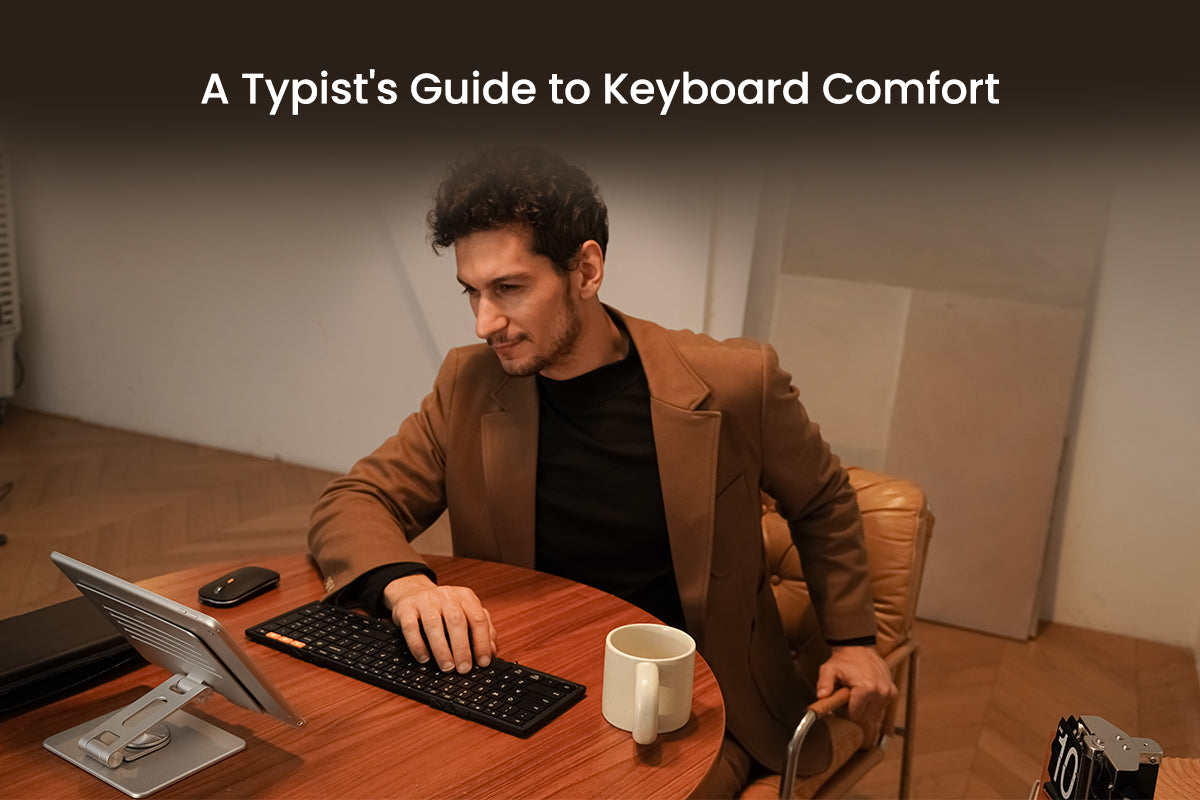
Your fingers hit keys roughly 10,000 times during an average workday. Most people blame wrist pain on their keyboard's shape, rushing to buy a split design that promises relief. Yet the real culprits often hide beneath your fingertips: how far keys travel, how hard you must press them, and whether the keycap surface fits your finger pads.
What Makes a Keyboard Ergonomic Beyond Shape
The keyboard market sells ergonomics as a shape problem. Walk into any electronics store, and you'll find split keyboards and curved layouts dominating the "ergonomic" section.
True ergonomic design goes deeper.
While shape affects your wrist position, it addresses only half the comfort equation. The other half lives in the mechanical feedback your fingers receive with every keystroke. Think of it like running shoes: the overall design matters, but cushioning determines whether your feet hurt after five miles.
Three mechanical factors create genuinely comfortable typing:
- The distance each key travels when pressed
- The force required to register a keystroke
- The shape and texture of the keycap surface
A keyboard with poor key travel feels mushy. One requiring excessive force turns every email into a finger workout. The best ergonomic keyboard optimizes these details, not just its shape.
Why Key Travel Distance Affects Your Typing Comfort
Key travel distance refers to how far a key moves from rest position to full press. Most keyboards offer between 1.5mm and 4mm of travel. The wrong choice for your typing style causes real problems.
Short Travel Reduces Finger Movement but Lacks Feedback
Short travel keys (1.5-2.5mm) require less finger movement per keystroke. Multiply this by 10,000 daily keystrokes, and you've saved your fingers significant motion. This reduction can prevent repetitive strain injuries.
But shallow keys have a drawback. They offer less tactile feedback, making it harder to know when you've successfully pressed a key. Many people compensate by bottoming out each keystroke, smashing keys to the base plate. This defeats the ergonomic benefit and actually increases finger impact stress.
Deep Travel Provides Clear Feedback but Requires More Motion
Deep travel keys (3-4mm) provide clear feedback. You feel the key activate partway through the press, allowing lighter typing with less impact. Touch typists often prefer this style because it supports a flowing rhythm.
The catch? Deep travel requires more finger extension per keystroke. Heavy typists who bottom out keys often benefit from medium-to-deep travel (2.5-3.5mm). Light-touch typists typically prefer shorter travel (2-2.5mm). The difference between 2mm and 3.5mm feels massive in practice.
How Keystroke Pressure and Keycap Shape Impact Comfort
Beyond key travel, two other features work together to determine comfort: actuation force (how hard you press) and keycap shape (what your fingers touch). Unlike key travel which affects typing rhythm, these two elements directly impact muscle tension and finger positioning.
Actuation Force Affects Your Finger Tension
Actuation force measures how much pressure triggers a key press, typically ranging from 45 to 80 grams. This seemingly small difference creates dramatically different typing experiences.
- Light actuation (45-50 grams) reduces muscle tension in your fingers and forearms. However, ultra-light keys can cause accidental presses when you rest your fingers on the home row.
- Medium actuation (55-65 grams) offers a balance, resisting accidental presses while still feeling light enough for extended sessions.
- Heavy actuation (70+ grams) suits specific situations where you need extra control.
The Comfort Advantage of Scissor Switch Keyboards
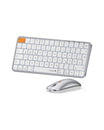
Scissor switch keyboards are notably comfortable for your fingers during long typing sessions. The key to this comfort lies in their unique "X" shaped mechanism under each keycap, which ensures that the force is distributed evenly no matter where you press the key. This design allows for a shorter key travel (the distance the key moves down) and requires less force to press compared to many other keyboards. The result is a lighter, more consistent typing action that significantly reduces finger fatigue and strain.
The benefits of scissor switches are amplified when combined with an ergonomic keyboard. While the scissor mechanism provides comfort at the finger level, an ergonomic keyboard often features a split design or a curved layout that supports a more natural, relaxed position for your wrists and forearms. Together, they create a holistic typing experience: the ergonomic layout addresses larger posture concerns, and the gentle, responsive keys of the scissor switch minimize effort with each keystroke. This synergy effectively helps in reducing stress on your hands, wrists, and arms over time.
How to Choose the Best Ergonomic Keyboard
Shopping for the best ergonomic keyboard becomes easier when you know what actually matters. Focus on specifications that affect daily comfort.
Check These Key Specifications First
Request or research these details before purchasing:
- Key travel distance (aim for 2.5-3.5mm for most users)
- Actuation force (55-65 grams offers a good starting point)
- Keycap profile (sculpted profiles with key dishes reduce finger strain)
- Switch type (mechanical switches typically provide better feedback)
Many manufacturers hide these specifications. If a company emphasizes ergonomic shape but won't disclose key travel or actuation force, they might be selling style over substance.
Match Features to Your Typing Habits
Consider these personal typing patterns when selecting specifications:
- Heavy typists who bottom out keys: Choose medium-to-deep travel (2.5-3.5mm) and medium actuation force (55-65 grams) for cushioning and control
- Light-touch typists: Opt for shorter travel (2-2.5mm) to reduce finger extension while maintaining precision
- Those who rest fingers on keys: Select medium-to-heavy actuation (60-70 grams) to prevent accidental presses
- Those who hover fingers: Benefit from lighter actuation (50-60 grams) since you're less prone to accidental triggers
Split and curved keyboards attract attention, but a well-designed traditional layout with proper key travel, actuation force, and keycap shaping can outperform a poorly-designed split board. Shape matters, but the details under your fingers matter more.
Start Paying Attention to What You're Actually Typing On
Ergonomic keyboards are more than curved plastic. The mechanical details your fingers interact with create or prevent comfort during long typing sessions. Next time keyboard shopping, ask about key travel, actuation force, and key structure. Your fingers will thank you.
FAQs
Q1. Can You Switch Out Keycaps on Most Ergonomic Keyboards?
While most of these keyboards allow replaceable keycaps, individual brands can affect keyboard compatibility. The stems in the Cherry MX style, which represent a basic cross-shaped post linking a keycap with a switch, are most common and most suitable for third-party keycaps..
Q2. How Long Does It Take to Adjust to a New Ergonomic Keyboard?
It takes most people one to two weeks to adjust to varying key travel and force of actuation; however, your accuracy and speed may suffer a loss of 10 to 20 percent for a short time. After getting used to a keyboard, do not switch to another keyboard back and forth among them.
Q3. Do Wireless Ergonomic Keyboards Have Different Key Feel Than Wired Ones?
The connection type doesn't affect key travel, actuation force, or keycap design. Wireless and wired versions of the same keyboard model use identical switches and keycaps. The only difference is the connection method, so you can choose based on desk setup preferences without compromising typing comfort or mechanical performance.
Q4. Are Mechanical Switches Required for Good Ergonomic Keyboards?
It depends on your personal preference. Mechanical keyboards typically provide satisfying tactile feedback, but their longer key travel can make typing more strenuous for many people. Some membrane keyboards, while featuring shorter key travel, incorporate unique structural designs—such as scissor switches—that deliver tactile feedback while reducing the effort required to press keys.